Testosterone
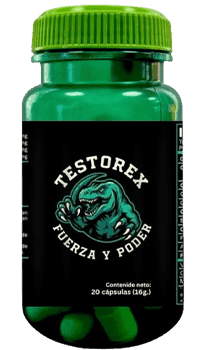
Testorex
Testosterone-support capsules — Guatemala and Spanish-language markets.
Read the review →Cholecalciferol (D3)
Strong evidence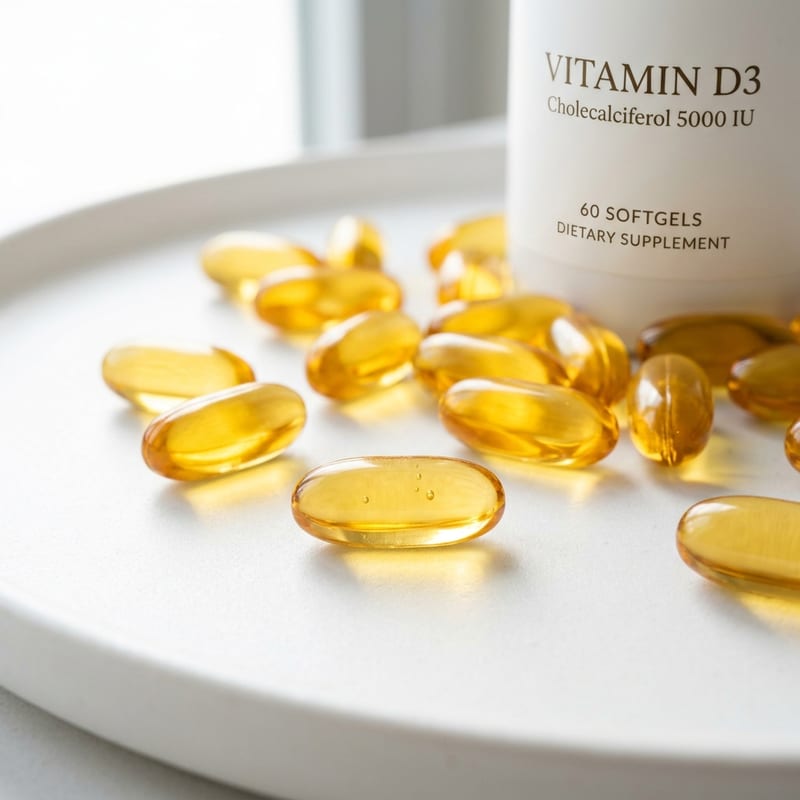
Technically a steroid hormone precursor. Deficiency is widespread across northern Europe in winter, and correcting it has a documented — if modest — effect on testosterone.
Relevant to: Testosterone · Men's Health
Vitamin D is synthesised in skin from 7-dehydrocholesterol under UVB exposure, hydroxylated in the liver to 25-hydroxyvitamin D (the storage form measured in blood tests), and hydroxylated again in the kidney to calcitriol, the active hormone. Calcitriol binds to the vitamin D receptor, a nuclear receptor found in most tissues in the body — including Leydig cells in the testes, the pituitary, and sperm cells.
That receptor distribution is the mechanistic basis for the interest in vitamin D beyond bone health, and it is why the compound behaves more like a steroid hormone than a dietary vitamin.
Above roughly 37° latitude — which includes essentially all of Europe north of Sicily — the sun's angle from October to March is too low for UVB to produce meaningful vitamin D in skin, regardless of how long you are outside. Add indoor work, sunscreen use, darker skin pigmentation (which requires substantially longer exposure for the same synthesis) and older age (which reduces skin synthesis capacity), and the result is a population where winter insufficiency is normal rather than exceptional.
Dietary sources are limited: oily fish, egg yolk, liver and fortified foods. Reaching sufficiency through food alone is difficult without regular oily fish intake.
A frequently cited randomised trial published in Hormone and Metabolic Research (Pilz et al., 2011) gave 3,332 IU daily of vitamin D or placebo to overweight men undergoing a weight reduction programme for one year. Total testosterone rose significantly in the vitamin D group and did not change in the placebo group. Participants were vitamin D insufficient at baseline.
Observational studies consistently show a positive association between 25(OH)D and testosterone levels. Interventional trials in men who are already vitamin D replete generally show no effect — the same deficiency-correction pattern seen with zinc.
Outside hormonal endpoints, the evidence for correcting deficiency is strong for bone health and reasonably supported for reducing respiratory infection risk, particularly in those with low baseline levels.
Test rather than guess. A serum 25(OH)D test is inexpensive and available through most laboratories, often without a doctor's referral. Below 30 nmol/L is deficiency, 30–50 nmol/L is insufficiency, 50–125 nmol/L is the generally accepted adequate range.
Use D3. Cholecalciferol raises and maintains serum 25(OH)D more effectively than ergocalciferol (D2). Vegan D3 derived from lichen is available.
Take it with fat. It is fat-soluble; absorption from a fat-free meal is substantially lower.
Consider K2. Vitamin D increases calcium absorption; vitamin K2 (menaquinone-7) directs calcium into bone rather than soft tissue. The combination is common practice and mechanistically sensible, though outcome evidence for the pairing is still developing.
Respect the ceiling. EFSA's tolerable upper intake is 4,000 IU per day for adults. Toxicity — hypercalcaemia, kidney stones, vascular calcification — is real but requires sustained intake far above this, typically 10,000 IU+ daily for months.
Presence on a label is not the same as presence at a researched dose — check the per-capsule amount.
Testosterone-support capsules — Guatemala and Spanish-language markets.
Read the review →Eight named actives in a gummy, sold in Canada — the broadest disclosed formula of its kind here.
Read the review →A brand covering several different formulas, not one product.
Read the review →It depends on the blood level, which is why testing beats guessing. For correcting insufficiency, 1,000–4,000 IU daily of D3 is the usual range. EFSA sets 4,000 IU/day as the long-term upper limit for adults.
In men who are deficient, a year-long randomised trial found a significant increase versus placebo. In men who already have adequate levels, trials generally show no effect. It corrects a deficit rather than enhancing normal function.
D3 (cholecalciferol). It raises and sustains serum 25-hydroxyvitamin D more effectively than D2. Vegan D3 from lichen is widely available if animal-derived sources are an issue.
Yes. Sustained intake well above 4,000 IU daily can cause hypercalcaemia, kidney stones and soft-tissue calcification. This is one of the few supplements where genuine toxicity is documented, so the upper limit is worth respecting.