Sexual Health
PRIME MAN Gummies
Eight named actives in a gummy, sold in Canada — the broadest disclosed formula of its kind here.
Read the review →Eurycoma longifolia
Moderate evidence
A Southeast Asian root with a reasonable trial record for free testosterone in stressed and hypogonadal men — and a well-documented contamination problem in unregulated products.
Relevant to: Testosterone · Sexual Health
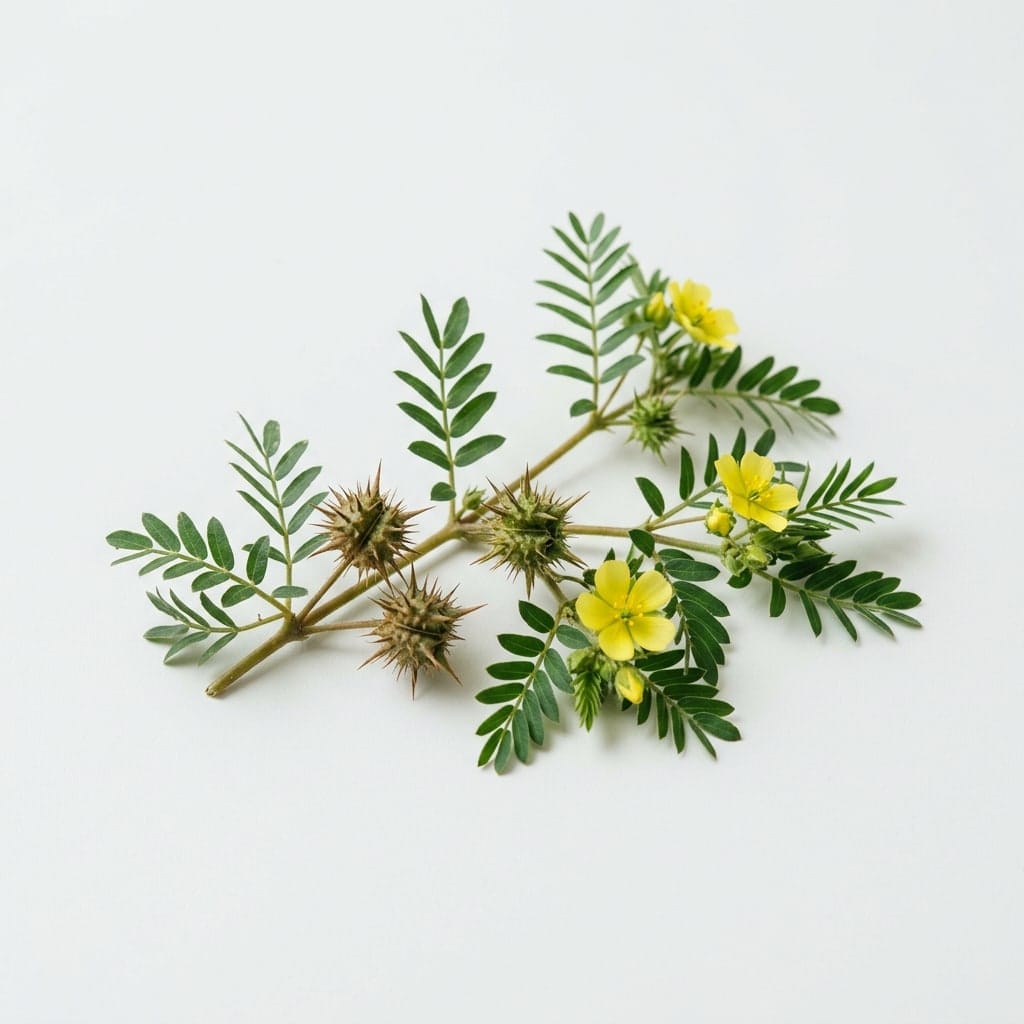
Tongkat ali is the root of Eurycoma longifolia, a slender tree native to Malaysia, Indonesia and Vietnam, where it has long traditional use as a tonic and aphrodisiac. It is also sold as Longjack, Pasak Bumi and Malaysian ginseng, none of which are botanically ginseng.
The active class is quassinoids, principally eurycomanone. Extraction method matters unusually much here: the trials with positive results almost all used water-based standardised extracts (typically 100:1), of which Physta and LJ100 are the two most studied. Ethanol extracts and raw root powder have very different compositions and are not interchangeable with the trial material.
Stress and hormones. A 2013 study in the Journal of the International Society of Sports Nutrition gave 200 mg daily of a standardised water extract to moderately stressed adults for four weeks and reported reduced tension, anger and confusion scores alongside an 11% reduction in cortisol and a 37% increase in salivary testosterone.
Hypogonadal men. A study in men with late-onset hypogonadism reported that 200 mg daily for one month moved the majority of participants from below to within the normal range for serum testosterone.
Sperm parameters. Trials in subfertile men report improvements in sperm concentration and motility over 3–9 months.
Body composition and strength. Results are mixed. Some trials in older men report improved lean mass and grip strength; others find no performance effect in trained athletes.
The pattern across the literature is that effects are clearest in men who are stressed, older or hypogonadal, and weakest in healthy young men with normal hormonal status — a recurring theme across this entire ingredient category.
The most cited hypothesis is that eurycomanone reduces binding of testosterone to sex hormone-binding globulin, liberating more of the free, biologically active fraction without necessarily changing total production. There is also in-vitro evidence for effects on steroidogenic enzyme activity in Leydig cells, and the observed cortisol reduction offers an indirect route via the cortisol-testosterone ratio.
None of these are established to the standard of a well-characterised drug mechanism. They are plausible explanations consistent with the observed data.
This is the point most worth knowing. Analyses of tongkat ali products sold in Malaysia and elsewhere have repeatedly found mercury contamination above permissible limits, along with lead and, in some cases, undeclared pharmaceutical adulterants. The plant accumulates heavy metals from soil, and the market includes a large volume of unregulated material.
The practical implication: buy only standardised, named extracts (Physta, LJ100 or equivalent) from suppliers who publish third-party heavy metal testing. This is not a category in which anonymous bulk powder is a reasonable purchase.
Beyond contamination, reported side effects are mild — insomnia and restlessness at higher doses, which is why morning dosing is standard. It should be avoided by men with hormone-sensitive conditions, and it has not been adequately studied in people with kidney or liver impairment. Cycling — for example five days on, two off — is common practice, though this is convention rather than evidence.
Presence on a label is not the same as presence at a researched dose — check the per-capsule amount.
Eight named actives in a gummy, sold in Canada — the broadest disclosed formula of its kind here.
Read the review →The better trials report increases in free or salivary testosterone in stressed, older or hypogonadal men, with 200 mg daily of a standardised water extract. In healthy young men with normal levels the effect is much less clear.
A standardised water-based extract — Physta or LJ100 are the two used in most of the positive trials. Ethanol extracts and raw root powder have different compositions and cannot be assumed to behave the same way.
Yes. Published analyses of market products have repeatedly found mercury above permissible limits, plus lead and sometimes undeclared pharmaceuticals. Third-party heavy-metal testing is not optional with this ingredient.
Morning. It is mildly stimulating for many users and evening dosing commonly causes difficulty sleeping.