Prostate Health
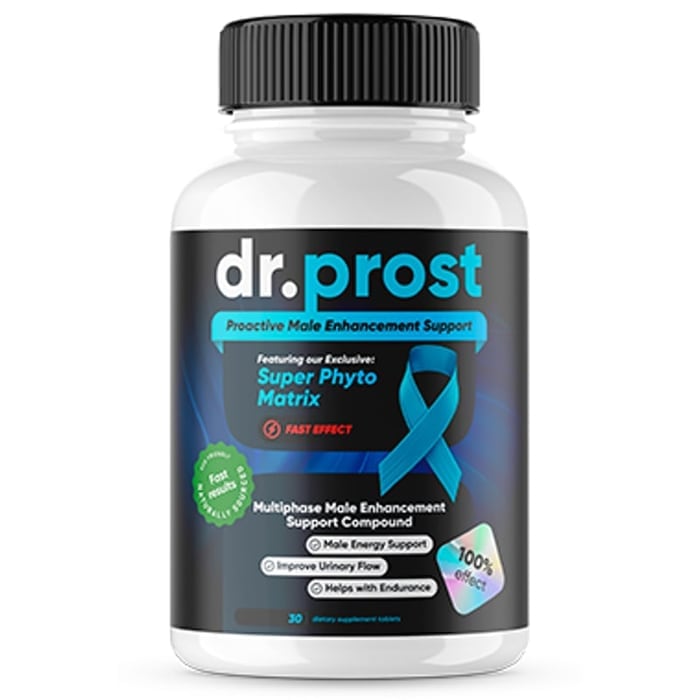
Dr.Prost
Actually built on the prostate ingredient set — including its negative trials.
Read the review →Urtica dioica
Moderate evidence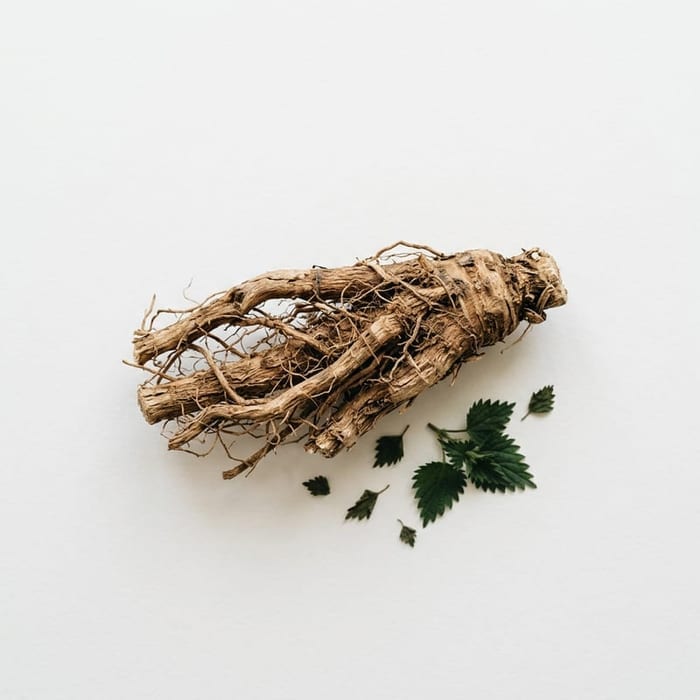
One of the few ingredients with a specific, plausible mechanism on the free testosterone fraction — and a common source of confusion, because nettle root and nettle leaf are different products.
Relevant to: Prostate Health · Testosterone
This is the first thing to check on a label. Nettle leaf is used for seasonal allergy support and as a mineral-rich nutritive herb; nettle root has an entirely different phytochemical profile and is the part studied for prostate and hormonal endpoints. A product listing only "nettle" or "Urtica dioica" without specifying the part is not telling you what you are buying.
The root's characteristic constituents are lignans — notably secoisolariciresinol and its derivatives — along with sterols such as beta-sitosterol and a group of polysaccharides.
Sex hormone-binding globulin transports testosterone in the bloodstream in a tightly bound, biologically inactive form. Because SHBG rises with age, an older man can have a normal total testosterone reading and a genuinely low free fraction — the mismatch described in detail on the testosterone page.
In-vitro work shows that nettle root lignans bind to SHBG at the site that normally binds testosterone. The proposed consequence is that less testosterone is held in the inactive bound state, raising the bioavailable fraction without changing production.
The honest caveat: this is demonstrated convincingly in the test tube. Human trials measuring free testosterone after nettle root supplementation are few and small, so the mechanism should be described as plausible rather than established.
Nettle root has a modest, mostly German and eastern European trial base for lower urinary tract symptoms in benign prostatic hyperplasia, both alone and — more commonly — combined with saw palmetto or pygeum. Reported effects are on symptom scores and urinary flow rather than prostate size.
Trial quality is generally lower than for the large saw palmetto studies, and no equivalent of the STEP or CAMUS trials exists for nettle root. Set against the fact that those large trials of saw palmetto were negative, the sensible reading is: plausible mechanism, limited evidence, well tolerated.
Trials generally used 300–600 mg daily of root extract, often split across two doses. Extract ratio and standardisation are rarely stated on consumer labels, which limits comparison.
Tolerance is good; mild gastrointestinal upset is the most common complaint. Because of its diuretic action, caution is warranted alongside diuretic or antihypertensive medication, and anyone with a urinary condition should be assessed medically rather than self-treating.
Presence on a label is not the same as presence at a researched dose — check the per-capsule amount.
Actually built on the prostate ingredient set — including its negative trials.
Read the review →No. They have different phytochemical profiles and different uses. Leaf is used for allergy support and as a nutritive herb; root is the part studied for prostate and hormonal endpoints. A label that does not name the plant part is not telling you what you are buying.
Its lignans bind SHBG at the testosterone binding site in vitro, which would raise the bioavailable fraction. Human trials measuring this are few and small, so it is a plausible mechanism rather than an established effect.
300–600 mg daily of root extract, usually split into two doses. Extract ratio and standardisation are rarely stated on consumer labels, which makes cross-product comparison difficult.
Nettle has a diuretic action, so caution is warranted with diuretic or antihypertensive medication. Any urinary symptom deserves medical assessment rather than self-treatment.