
Fenugreek
Trigonella foenum-graecum
Limited evidence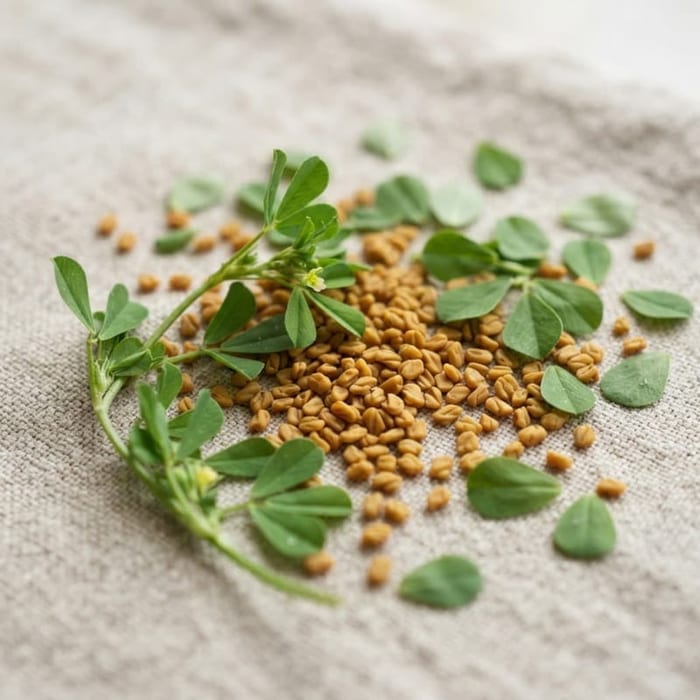
A culinary spice with a small trial base for libido, a better-supported effect on blood glucose, and a research literature dominated by branded-extract manufacturers.
Relevant to: Testosterone · Sexual Health
What the libido trials found
Several small randomised trials have reported improvements in self-reported sexual desire and arousal scores in men taking standardised fenugreek extracts over 6–12 weeks. Effects on measured testosterone have been inconsistent: some trials report an increase in free testosterone, others no hormonal change alongside the subjective improvement.
Two caveats belong with those results. Sample sizes are small — typically 30 to 120 participants. And a large share of the positive trials studied specific branded extracts (Testofen, Furosap and similar) and were funded by the companies that sell them. That does not make the findings wrong, but independent replication is thin, which is why this profile is rated limited rather than moderate.
The better-supported effect
Fenugreek's strongest evidence is somewhere the male-health marketing rarely mentions: blood glucose. Its soluble fibre (galactomannan) and the amino acid 4-hydroxyisoleucine slow carbohydrate absorption and stimulate insulin secretion, and meta-analyses report meaningful reductions in fasting glucose and HbA1c in people with diabetes.
That is clinically relevant for anyone taking antidiabetic medication, where the two effects can add up — see the interaction note below.
Practical notes and interactions
Doses in trials range widely, from around 500 mg of a concentrated standardised extract to several grams of seed powder, so extract type determines what a given milligram figure means.
The most-reported side effect is memorable: fenugreek contains sotolon, which produces a distinctive maple-syrup odour in sweat and urine within a day or two of starting. It is harmless and reversible.
Interactions that matter: antidiabetic medication, because of the additive glucose-lowering effect; anticoagulants, since fenugreek contains coumarin derivatives with mild antiplatelet activity; and pregnancy, where it has traditional use as a uterine stimulant and should be avoided. People with peanut or chickpea allergy should be cautious — fenugreek is a legume with documented cross-reactivity.
Products on this site that declare Fenugreek
Presence on a label is not the same as presence at a researched dose — check the per-capsule amount.


Frequently asked questions
Does fenugreek raise testosterone?
Results are inconsistent. Some small trials report increases in free testosterone; others report improved subjective libido with no hormonal change. Most positive trials used branded extracts and were manufacturer-funded, so confidence is limited.
Why does fenugreek make sweat smell of maple syrup?
It contains sotolon, an aroma compound excreted in sweat and urine. The effect appears within a day or two of starting, and it is harmless and fully reversible.
Is fenugreek safe with diabetes medication?
Use it only with medical supervision. Fenugreek meaningfully lowers fasting glucose and HbA1c in its own right, so combining it with antidiabetic drugs risks additive hypoglycaemia.
Who should avoid fenugreek?
Anyone pregnant — it has traditional use as a uterine stimulant — anyone on anticoagulants, because of its coumarin content, and anyone with a peanut or chickpea allergy, since cross-reactivity is documented.