Sexual Health
Offer closed
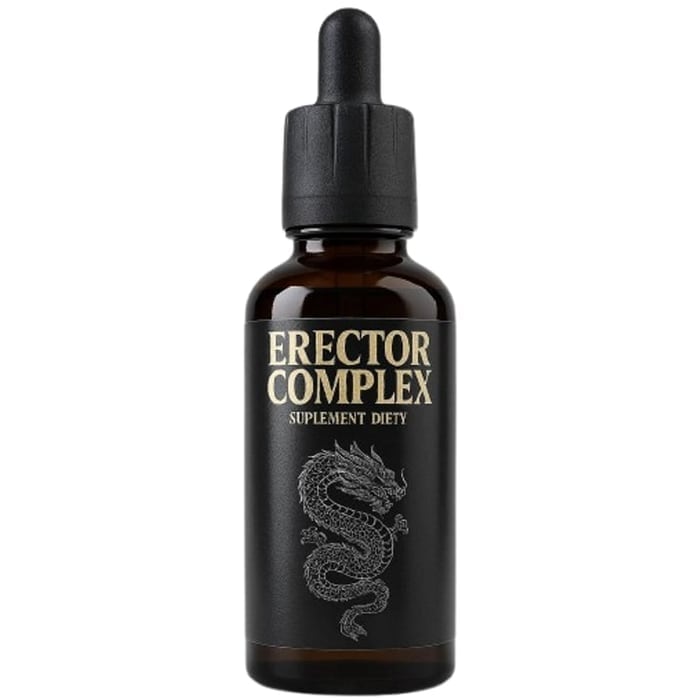
Erector Complex
Liquid cordyceps and reishi concentrate, standardised.
Read the review & alternatives →Cordyceps militaris / sinensis
Moderate evidence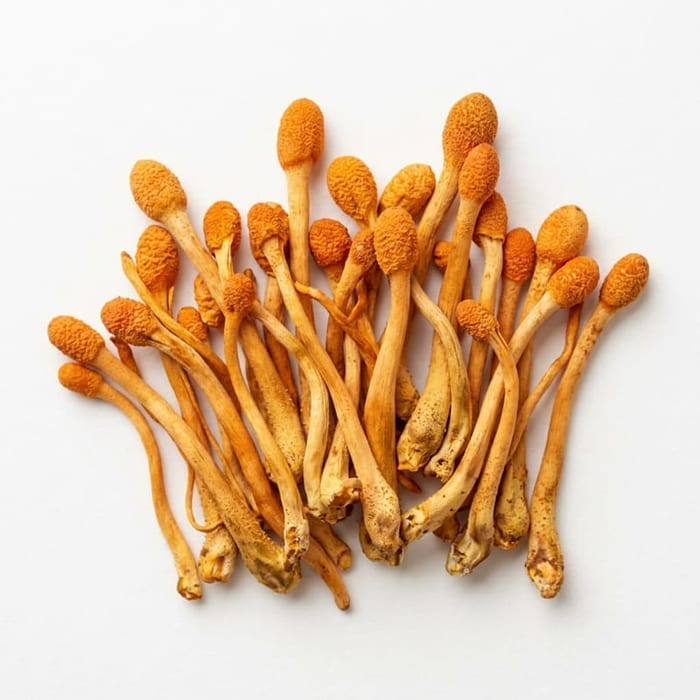
A medicinal fungus with a genuine, modest evidence base for exercise capacity — and a labelling situation where the species you think you are buying is usually not the one in the capsule.
Relevant to: Men's Health · Circulation
Wild Cordyceps sinensis — the caterpillar fungus of the Tibetan plateau — is one of the most expensive biological commodities on earth, priced per gram at levels that make its presence in an affordable supplement implausible.
What is actually sold is one of two things: CS-4, a fermented mycelial strain cultured from C. sinensis and used in much of the Chinese clinical research; or Cordyceps militaris, a different species cultivated on grain substrate, which is a far richer source of cordycepin — the nucleoside analogue that gets most of the pharmacological attention.
Both are legitimate and both have research behind them, but a label saying "Cordyceps sinensis" on a low-priced product is usually describing CS-4 mycelium. A further check worth making: mycelium grown on grain is harvested with the substrate, so a product may be substantially starch by weight. A stated beta-glucan content, rather than a vague "polysaccharide" figure, is the marker of a serious extract.
This is where cordyceps has its best support. A randomised trial in healthy older adults reported improvement in VO₂ max and metabolic threshold after 12 weeks of CS-4. A separate trial in older adults found improved exercise performance versus placebo. Studies in younger trained athletes have been more equivocal.
The proposed mechanism is improved oxygen utilisation and ATP availability rather than stimulation — which fits the observation that effects appear over weeks rather than within an hour, and that users do not report the jitteriness of a caffeine-led product.
Beyond exercise, cordyceps has been studied for fatigue, immune modulation and — in early-stage laboratory work — for cordycepin's effects on cell signalling. Those latter findings are cell-culture pharmacology, not clinical evidence, and should not be presented as health outcomes.
Trials generally used 1–3 g daily of extract, taken continuously for 6–12 weeks. Products supplying tens of milligrams are far below that.
It is well tolerated; mild gastrointestinal upset and dry mouth are the usual complaints. Caution is warranted for anyone on immunosuppressant medication, because of the immune-modulating activity, and for anyone with an autoimmune condition. As a fungal product, it is unsuitable for people with mould or fungal allergies. Cordyceps may also have mild antiplatelet activity, so it should be discussed before surgery.
Presence on a label is not the same as presence at a researched dose — check the per-capsule amount.
Liquid cordyceps and reishi concentrate, standardised.
Read the review & alternatives →Almost never the wild fungus — it is priced per gram at levels no affordable supplement could carry. Products are usually CS-4 fermented mycelium or the cultivated species Cordyceps militaris. Both have research behind them; the labelling is just imprecise.
There is moderate evidence in older adults, with randomised trials reporting improved VO₂ max and metabolic threshold after around 12 weeks. Results in younger trained athletes are more equivocal.
1–3 g of extract daily, for at least 6–12 weeks. Formulas supplying tens of milligrams are well below the levels used in the research.
Anyone taking immunosuppressant medication or with an autoimmune condition, because of its immune-modulating activity, and anyone with a mould or fungal allergy. It may also have mild antiplatelet activity, so mention it before surgery.